




VORFAHRqr . AI
AI SAAS for tile manufacturingQR-tile and web page builder
- Chat GPT API
- AI photo update service
- Cloud storage
- Memory page builder
- Google, Facebook authentication
- STRIPE payment
- [ DEVELOPMENT STORY ]
Analysis Architecture Design Programming
Scope Price Contract
Request15-minute consultation Strategy, priceshow we differ from competitorsWe ALWAYS deliver MORE than the requirements
AI SAAS for tile manufacturingQR-tile and web page builder

MVP of an oncology applicationAutomation of medical prevention

Logistics system.TMS (Transportation Management System)

A business social network built end to end.Mobile-first PWA: feed, contacts, monetization.

A voice secretary that talks like a humantelephony, browser and Telegram in real time

Real-time stream processingexperience the market barely has

A voice AI agent that hands tasks to Codex and Claude Codesay the task, she gets it done and reports back

AI development guided by architecture, not vibe codingarchitecture first, then generation

An autonomous AI agent system: visionary, architect, programmera team that sets its own goals and writes code

AI agent evolution: hundreds of mutated replicasselecting the best versions of an autonomous system

Deterministic AI secretary: predictable phrases and voicea voice agent on the ordinary phone network

Software for a German holdingConstruction, accounting, and sales management

Bus ticket search.Unique booking algorithms

Application generatorAutomates programmers' routine tasks

Polish factory.Premium manufacturing and Fulfillment

Tax filing automationFor small and medium businesses

Comprehensive system for companies.Custom design and architecture

A 3D overview of every company projectA repository rendered as a city you can fly over

Query interface for a medical data warehouseAgreeing the UX before the warehouse is built

An AI assistant trained on company datavoice access to software functions

Bringing drivers and service stations togetherClient application and CRM

HIS (Healthcare Information System)For family doctors and prevention

MVP of an educational platformYachting practice in Barcelona

Digital university conceptWebsite, audit, proposal, and technical specification draft

Yacht search and rental onlineCabin booking

Unique taxi and delivery service.Worldwide

Yacht tour searchBooking places in a cabin

Marketing platform.The largest analytics and advertising platform

Project for the MFA and UNDigital pass for Ukrainians, diaspora communities, and international partners

Application and admin panel (CRM)For customer and order management
Intelligent data analysis.For GadFul - Amazon partner

Real estate platform.Accounting system for realtors and estate agencies

Monitoring and automation.Comprehensive for sales, hiring, and warehouse departments

AR demonstrations for surfaces and materials.Web prototypes for tile fitting and WebXR scene testing

Sales management.Client base interactions and planning for the sales department

Warehouse management.Stock, finances, storage networks.

Personnel management.Employee accounting, hiring, and HR program

Service for dental clinics.Builder for clinic process setup

Project planning system.Project management, team plan organization (not for sale)

Product management (PDM PIM).Information architecture design, content population.

Business process managementRegulations that define company behavior.

Content distribution and autoposting systemTopic → article → channels → click analytics

For systematizing and automating client request management

1C-based AI agentLive demo: building materials wholesaler

Purchase planning and demand forecastingA prototype with a detailed data model

Free software interface for integrations using DDD-like methodology

Production automation design.Working prototype, data schema, and dashboard built around the company's real processes.

Smart fireweed tea fermentation chamber.Microclimate history and a closed feedback loop.

A physics-first digital twin for manufacturing.Landing and interactive control room.

Digital house passport: pre-purchase due diligence, maintenance and smart home.A registry from the plot to the socket, with an AI agent.

Heavy equipment rental marketplace.A prototype focused on the reactive interface: no database and no business logic.

Health atlas built on biosensor dataAn anatomical body map on top of measurements

A town portal with a public development planBusiness map, feedback, self-updating content

A map of subject domains and a knowledge baseprojects, modules, articles and links on one canvas

Management system for a care home networkCRM, HRM, care plans, contracts, P&L

A public AI consultant for the companyOne core for the website, marketplace and Telegram

A pipeline of 10,000 application prototypesFrom idea to a working app with no human in the loop

An interactive cartoon series about automationFrom the first berry to the first transistor

A 144-episode browser 3D seriesMaterials, operations, quality and technological consequence

Systematic hypothesis screening across literatureLooks for failures, not confirmations

Voice-driven goal decomposition into tasksDictate a goal, receive a plan with deadlines

A restaurant application conceptDelivery, loyalty and reservations in one product

A cost and action monitor for an AI agentWhat every agent task actually cost

Rule-driven property listing monitoringHard criteria instead of an endless feed

Validating a keyword set against realityNot "how many keywords" but "which ones are real"

Sensors, controllers and a realtime monitorTemperature, humidity, access and telemetry

Anatomical map of personal metricsorgans coloured by measured state

Inventory planning alongside the Forma ERPrecords in Forma, decisions in Rytm

Customer service platform for B2B companiesa vetted service network with bonuses

A city map service for local businessRakhiv modelled as a web app

Educational game platform for childrenmaths and English lessons as games

Online service for finding trainers and workoutsfrom spec to a two-sided MVP

Flooring online store built on ECOCOMgoods sold by the metre from a roll

Fitness app for home workoutsbackend, database, admin and API

Marketplace with a partner programmeevery buyer is also a partner

Live online language lessons with native speakersbusiness analysis, spec and backend logic

Clinic MIS integration with eHealth, analysedAPI documentation and methods reviewed

Tours, excursions and stays across Georgiafor travellers, hotels and agents

Online store for a furniture factory and showroomsOdesa, Kyiv, Lviv in one catalogue

Designing an intercity bus booking serviceUkraine to Europe, before any code

An app for a psychologist and their clientstherapy instead of spreadsheets and chats

Online store for a fine jewellery brand18k gold and natural diamonds

Digital notice boards you post to by QR codeinstead of paper clutter on poles

Resume builder as a reactive web appintegrated with an existing API

AI service: text to speech and speech to textAWS, Node and React on TypeScript

A platform for a healthy, mindful lifeworkouts, nutrition, sleep, meditation

Software for homeowner associationsbuildings, requests and debts on one screen

Back office for selling bus ticketsfrom the owner to the driver

Mobile app prototype for the 3rd Assault Brigade training platformthe product outline before development

AI agent for lead generation and salesTelegram bot, web app and mobile CRM

Designing and prototyping a clinic systempatient, doctor and admin before main development

AI SEO and GEO for an artist's Readymag sitea site that search and AI can read

A system for bus carriers from website to owner dashboardbuilt on Svit BUS, BusTicket and LEX

Intelligent data analysis.For GadFul - Amazon partner

Client and order applicationFor Ukrainian glass manufacturing

A company MCP server for any AI agentA company visible to ChatGPT, Claude and Codex

An Android app for recording and call logsNo root, no hidden recording, no file uploads

Daily video publishing without an operatorTopic → video → publication → artefacts

An AI core for sales and conversation automationDDD architecture instead of prompts scattered in code

An operations dashboard for promotionEvery website and channel source on one screen

Driving an AI agent from TelegramNo public IP, domain or webhook required

Switching AI providers without rewriting codeOne gateway instead of edits across every project

Watches for the answers you are waiting forNot "new mail" but "the answer you needed arrived"

Lead generation with one agent per companyCompany queue, research, outreach, status

Volunteer IT help for displaced people in Rakhivrelief HQ, admin centre, council, school

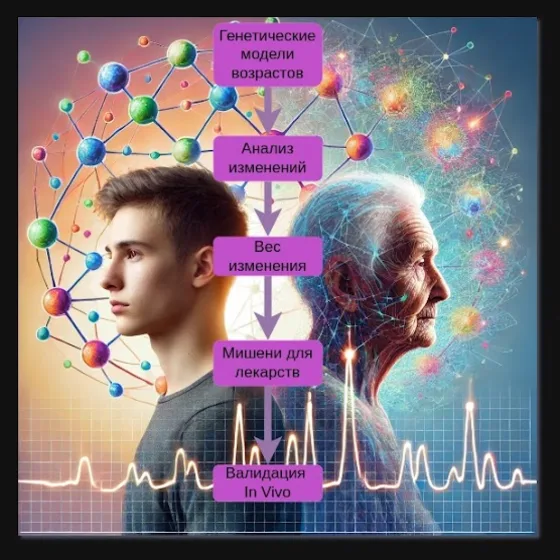
A graph model of gene changes in ageinga database of tissue expression

Immortality: systems beyond softwareengineering immortalism through geriatrics

How we price application developmentbased on market hiring rates
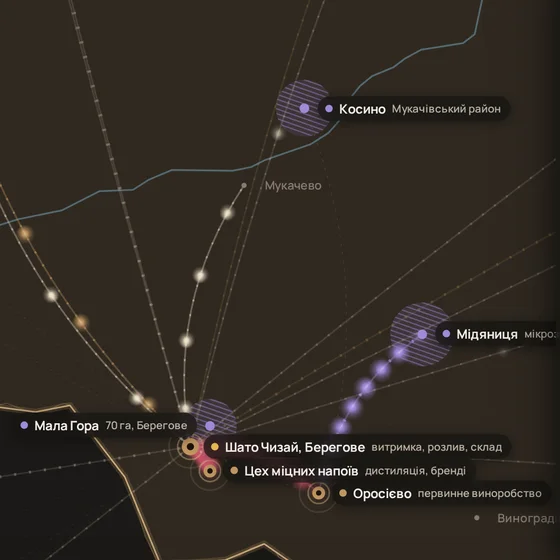
Resource planning from vine to shelfprototype for Chateau Chizay


Everything is going well, we are moving according to plan on a complex project with a history. We figured out the processes and architecture, implemented a number of improvements, and are already working on scheduled tasks while simultaneously updating the structure. (c) Maksym, SJ company.
Oleg is a top-level professional. Only positive impressions remain from our cooperation. Highly recommend!
I turned to Oleg Grigoriev and his team because I had heard about the high-quality, thorough, and responsible work they do in their field. I want to thank the team and its leader Oleg for the work done. The work was completed quickly and accurately, and most importantly — we achieved our goal, and the advice received from Oleg was spot on. Professionals, responsible and very promising guys! Highly recommend!!!
Oleg and I are working together at SITIO Group, where he was Team Leader and now he is Executive Director. Oleg is a fount of information about the latest news of development, competitive stats and creative ways to make product great and develop it fast. He is a talented, hard-working and warm co-worker. I'm glad to work with him!
Being in the top 5 PHP developers in Ukraine, Oleg builds multifunctional applications on any technology stack, providing comprehensive services accessible to the domestic market with reliable business protection. Don't accept "out-of-the-box" solutions and value your enterprise data? Understand that your business is truly unique in the industry? Then feel free to request a free consultation from Oleg Grigoriev!
My project is not an easy one, it has a lot of functionality. I chose Oleg's company because he is persuasive, confident, knowledgeable, and simply a good person. He is competent in his profession. Punctual. Organized the work very clearly. Quickly wrote a functionality scheme. Appointed a responsible project manager, completed the first stage a bit ahead of schedule. Added useful features on his own initiative that were not in the technical specification. Don't be afraid to entrust your project to Oleg. He will deliver 100 percent.
We worked with Oleg in several stages. The project is complex and multifunctional, so naturally there were some issues that had to be resolved "on the fly." I want to note Oleg as a specialist who can find a solution in any situation. In addition, I received a number of additional features free of charge, and each stage of the project was accompanied by a video review, which made testing easier. Excellent level of service.


I suggest discussing your project in a video meeting. To do this, please complete a short briefing questionnaire, the results of which we will analyze and use to prepare for the meeting. Contact us and we will send you a list of questions to prepare for your project.
More about Oleg


I suggest discussing your project in a video meeting. To do this, please complete a short briefing questionnaire, the results of which we will analyze and use to prepare for the meeting. Contact us and we will send you a list of questions to prepare for your project.
Send request




























Ingello Systems is a custom development team for CRM, ERP, WMS, SaaS, AI services and industry platforms when off-the-shelf products no longer fit. For Education, we combine business analysis, architecture, interfaces, engineering and integrations into one controlled delivery process.
Service and company facts current as of November 2026FAQ
Systems with distinctive business logic: CRM, ERP, WMS, SaaS, marketplaces, industry platforms, AI features and integrations that cannot be solved well by configuring one packaged product.
With a concise review of the goal, current workflow, users, constraints and expected effect. The next stage can be an audit, architecture, prototype or implementation.
Yes. The team can audit it, stabilise critical areas, add integrations and evolve the system in stages without replacing every function at once.
An initial range follows the first review. A defensible estimate follows agreed boundaries, risks and architecture decisions; that is more useful than a random number before understanding the task.
Scope, stages, acceptance criteria, guarantees and rights transfer are defined in the contract for each project. Data and security requirements are agreed before implementation.
We will break the problem into roles, data, risks and a practical next step — without obliging you to begin a large build blindly.
 #1
Preparatory work
We receive initial information from the client about the project's goals and functions (usually based on a brief or verbal interview). The information is analyzed and primary documents are created. The process is strictly confidential. If necessary, we sign a non-disclosure agreement (NDA).
There are paid and affordable preparation options
 #2
Preparatory work
We determine the project category and subject area. It is necessary to identify any partially ready-made modules, libraries, or third-party services. Sometimes, their quality and/or cost need to be compared, installed, tested, and studied—either superficially or in depth.
There are affordable and in-depth options
 #3
Preparatory work
You need a budget estimate. But it is not always possible to provide an honest estimate without analysis. Sometimes, it is necessary to study the client's business, reports, and processes. Additional research may be required (for example, studying external services). Sometimes, an audit of an existing system/application is needed. Occasionally, R&D is required—creating experimental programs for evaluation.
There are affordable and free versions of this stage
 #4
Preparatory work
At this stage, we are ready to have a call and discuss the project in detail. This can be a quick and concise call focused on the main points, or a detailed and thoughtful call (or a series of calls) with preliminary planning, where you can ask any questions you have, in any quantity.
Sometimes free, sometimes affordable
 #5
Preparatory work
Based on all the collected data and operations performed, we are ready to provide you with budget recommendations and implementation options. Usually, the commercial proposal contains 2-3 different budget options to choose from. It can be provided in writing and discussed verbally.
This stage is free, but there are also paid sessions.
 #6
Preparatory work
We adapt the contract for you. All clauses are negotiable. We agree on individual terms of cooperation and sign the contract in any language. This can be a contract for technical specification development, business analysis, design, prototyping, software development, API, server setup—or for all of these together, turnkey. Read more about paid development stages below. System design and the first working version — three budget options →


 #7
Phased development
Sometimes the client already has a good technical specification. In that case, we skip this step. If not, together with the system architect, we create a textual and graphical formalization of the functional requirements, which is attached to the development contract. The architect creates a document with minimum system quality (non-functional) requirements. There are different pricing plans.
 #8
Phased development
If the client already has a design, we skip this stage. For some services and systems, design may not be necessary—templates can be used. This stage is the most visual for the client—creating a visual layout of the future system's interface. Our designer, application architect, and project manager organize the layout process with either a custom or standard style.
 #9
Phased development
Architecture design is about making the key decisions on which the project is based. These decisions regarding core subsystems and algorithms will determine whether the project achieves its business goals. Formally, this is graphical modeling of the system according to requirements using UML or simplified notation. In essence, it is making the KEY technical decisions that determine the business's success as a system.
 #10
Phased development
An important stage in creating the first working model of the system. Creating the database and basic data operations according to the technical specification. Marking up the user interface. Demonstrating the prototype to the client for feedback and revisions. This stage provides all project stakeholders with a clear, hands-on sample of the project.
 #11
Phased development
Technical implementation of the design in HTML/CSS. This stage involves creating the interface described in the design or technical specification. Interfaces are linked together. At the end of the stage, a demonstration is held.
The coded design is much more interactive. It responds to the cursor, button clicks, and links. This is a more lively version of the product.
 #12
Phased development
This stage is prioritized because integration carries many risks and should be done as early as possible; often, integration extends throughout the entire project.
The main goal of this stage is to collect access credentials, study documentation, and conduct test integrations with the required systems (for example, payment/delivery/mailing/telephony/AI systems, etc.).
 #13
Phased development
At this stage, we already have the system's data core and external interface. All that remains for the developers is to connect them using a framework with support for open layers. At the end of this stage, we have a rough version of the system that meets the functional requirements but does not yet meet the system requirements.
 #14
Phased development
Creating a version suitable for testing by a loyal audience. This stage involves "smoothing out the rough edges" and optimizing the main user flows. This is a control stage. During its execution, team interaction and development become more predictable and stable.
 #15
Phased development
Finding and fixing errors in the application under various scenarios according to pre-developed test cases. This is a critical stage, during which the final work log is compiled, necessary for launching the minimum viable version for monetization (MVP or beta version of the system).
 #16
Phased development
During the previous stage, a log of required work was compiled. Additionally, the client may add new requirements if the budget allows. At this stage, a functionally and financially viable system is completed, which meets the technical specification and is ready to "deliver value."
 #17
Phased development
Enhancing security, optimizing system loads, saving server resources, refactoring source code, preparing system documentation, adding special monitoring and user statistics tools—all of this is done at this stage.
 #18
Phased development
Planned and unplanned improvements. This stage is determined individually. Depending on the project's needs, the team can be reduced for cost savings or increased to expand functionality. The cycle closes, and we can return to step #1—collecting data for implementing a new idea!


We provide guarantees that are officially documented in the contract.
The contract is often tailored individually, but by default you receive the following guarantees:
You can find sample contracts on the website (below).
No, but over the past 7 years, software and process development has become increasingly interesting and large-scale for us, while also becoming more predictable and safer—because we have refined our processes and acquired the necessary competencies: business analysis, design, management, prototyping, programming, testing, and implementation. We are grateful to all our earlier projects, where we lacked the experience to provide the full range of services, specialists, best practices, and consultations required for a project (we started long ago with simple programming, without management or architectural design).
Now, thanks to our projects, we have experience in dozens of business domains: warehouse, accounting, HR, multidisciplinary medical institutions, car repair, apartment renovation, management companies, clothing, used cars, measuring instruments, education, marketplaces, robotics, franchises, sports, training and nutrition, gambling and multiplayer games, tourism, booking, blogging, furniture manufacturing, dentistry, real estate, cryptocurrencies, metallurgy, commodity business, marketing agencies, advertising platforms, cryptography, government databases, b2b, b2c on amazon, and more.
Experience with various interesting and unique entrepreneurs, different applications, and a wide range of modern technologies allows us to launch new projects, startups, and even entire companies with maximum risk minimization.
We have grown gradually, and no matter what prices we set on our websites or in commercial offers, this question always comes up. The answer has always been roughly the same: “because there is demand”. There is always demand for complex custom services and good service.
However, later we started to analyze—what does “expensive” really mean? In our view, expensive is not about the amount of money, but about the overall result. If the result brings you nothing and only wastes your time and money, then any amount can be “expensive”. Even if you paid nothing but wasted your time, that is “expensive”. But no matter how much you pay for a project, if it brings you clients, sales, higher average checks or quarterly revenue, user loyalty, an investor, and on top of that, valuable experience, good mood, and unforgettable time—can that really be called expensive?
We work at market prices. In the past, people found it hard to accept that they were “buying air”. Now there is no doubt: data is the new gold, information technology is an untapped field of opportunities, and in this world, there is more left to automate than has already been automated. If your business is not online, you are not in business, and therefore, if you are well established online, you are comfortable in business. These are quotes from the most experienced of our contemporaries. And after 2020, there is no doubt that modern IT is just the beginning of a great future, and investing in “air” is essential, because without air, a business cannot survive.
It's hard to say what organizational form “ingello” belongs to, since our areas of activity are very diverse and our global plans are unprecedented. So let's focus on the development division—ingello/systems. It is safe to say that, although we work in an office and have our own rules and regulations, despite complex management and a systematic approach, working with us does not feel like working with a typical company. We organize small teams of specialists whose capacity, productivity, and creativity are focused on our clients, and these are always compact and independent teams without unnecessary bureaucracy and with simple, transparent reporting.
We are often compared to large companies, although for each project we provide teams without redundant roles (5–7 people maximum). If you are an investor considering investing in a project with minimal involvement, want super-comprehensive services from promotion and marketing to social media management and accounting, then experienced large companies are probably the only ones who can help you determine your budget. They have enough resources.
However, if you personally make decisions about the development of your company or startup, if you need an individual approach, if you want not only to invest but also to understand and perhaps actively participate in the project with your employees, then welcome. Our team will strive to be the best choice for you and your goals.
We love and value freelancing and have adopted many (good) things from this free and independent style. We strive to provide the most comfortable and creative conditions for our employees, but of course, we also have fair restrictions that guarantee task completion for the client.
Speaking of price, it may seem that we are much more expensive than a solo freelancer who “does everything themselves”. Certainly, there are famous solo geniuses, but in general, a modern project requires a team of specialists. You can hire and manage a team of a dozen freelancers yourself. However, in practice, this is neither faster nor cheaper, and rarely does anything actually get done, because to be the cheapest, a freelancer simply has to abandon all good practices of programming, design, documentation, security, and so on. As long as it’s “by the letter of the technical specification”.
We have all the necessary processes streamlined and a huge base of actively used best practices, which is updated daily. Overall, in our humble opinion, with equal services, processes, and standards, the services of an organized team can be more convenient and even cheaper than organizing all processes yourself.
But to be fair, in a sense, we are freelancers ourselves, since we periodically work on freelance platforms and have top ratings in several categories, set local records, are featured in articles, interviewed, and appear in podcasts. We often create simple projects on freelance platforms (mainly for the internal needs of the company), and people who have worked with us learn our standards and approaches, while we learn new things from them, which contributes both to freelancing and to the technology market as a whole.
To improve the quality of people's lives and resource accessibility through large-scale automation of routine and non-creative processes.
Every budget, like every IT project, is unique! We will help you not only with programming, but also with analyzing and evaluating your project. We provide free warranty support during the trial period as per the contract. Based strictly on Ukrainian market prices , we will offer several budget options and help you plan payment and development stages. To calculate the budget, we will dive into your project and help you get started with a free consultation. All stages—from analysis, design, and architecture to programming and testing—will be under our responsibility and management. You have high standards for quality and a technically complex non-template project, which is why you found us.
years we have been designing and programming exclusively custom
systems for organizations
Our goal is the organized increase of our client's annual company profit
30+ large and complex corporate projects
years we have been developing and managing effective
web applications for startups
We create the team, technical specification, prototype, and MVP, and help you recoup your investment
5000+ orders and consultations for small businesses and startups
We provide free daily technical support after project delivery, which will quickly fix any issue in the project. None of our competitors include this in their contracts.
The process is designed so that you see transparency at every step:
System design: three budget options, video examples of prototypes and documentation samples →
Result: a visual model of the future product and a clear set of business requirements (general requirements for the application and related online services).
Result: a package of documents and models required to start full-scale development.
Bonus: if you order the third stage immediately, the second stage is provided free of charge (save $800).
Result: a prototype that reflects the main functions of the future application and allows you to clarify requirements, conduct demonstrations, and collect feedback.
After that, if you like, our AI will help you prepare for the call.
Your consultation will be led byOleg Grigoriev


